











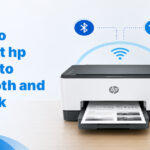








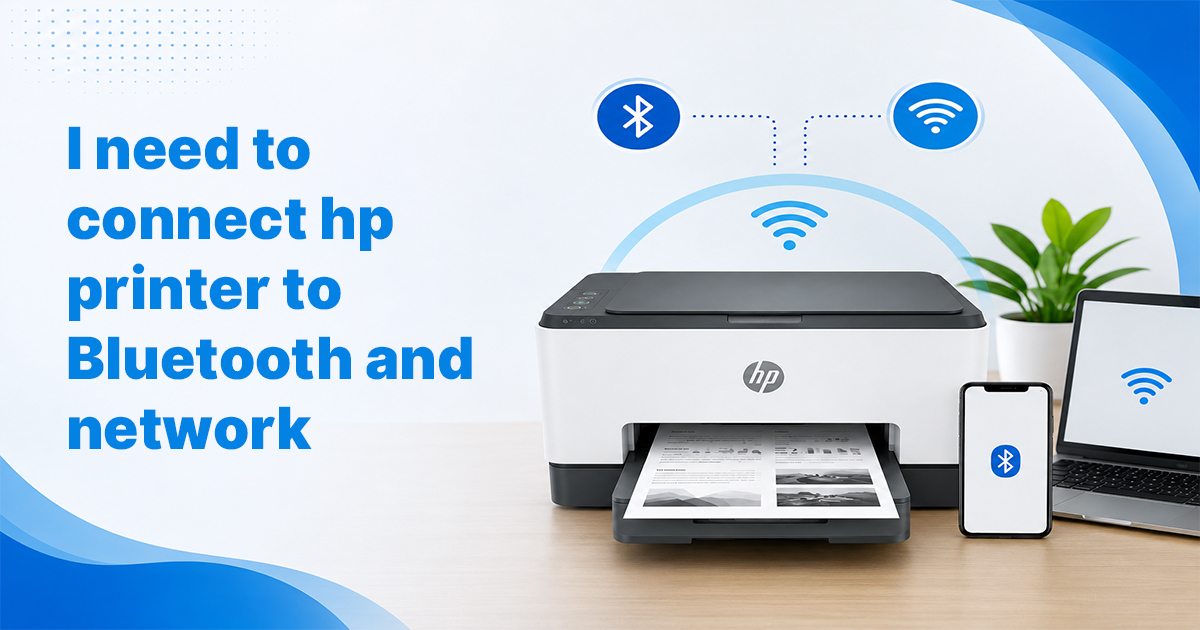

Investing in an agile wireless desk setup can completely redefine your weekly workflow efficiency. Whether operating out of a dedicated corporate space or managing tasks from a residential study, learning to connect HP printer to Bluetooth systems or local networks eliminates administrative bottlenecks instantly. Modern peripheral manufacturing prioritizes decentralized access, meaning a physical workstation no longer dictating where or how a document is processed.
When a team can rapidly send digital assets to a central hub from a smartphone, tablet, or laptop, organizational friction disappears. However, executing this interface requires a baseline understanding of digital handshakes, network topography, and device provisioning.
The Landscape of Modern Local Peripheral Connections
Peripheral design has fundamentally shifted away from legacy local area data links. Historically, maintaining a functional workflow meant routing copper wires across desks, presenting an aesthetic mess and creating distinct single-point hardware constraints. Today, modern infrastructure relies heavily on variable short-range radio frequencies and local area modems to execute print commands without latency.
+-------------------------------------------------------------------+
|                     CHOOSE YOUR ACCESS PROTOCOL                   |
+------------------------------------+------------------------------+
| Local Ad-Hoc Access                | Cloud & Multipoint Access    |
| (Bluetooth Smart / BLE)            | (Dual-Band Wi-Fi / Ethernet) |
| Best for direct mobile pairing     | Best for shared multi-device |
| without network routers.           | offices and high-speed data. |
+------------------------------------+------------------------------+
Stabilizing these radio paths ensures that high-resolution data matrices transfer accurately from memory banks to the physical document layout. By placing the receiving machine in a centralized location, a household or office can maximize hardware utilization rates while keeping physical spaces uncluttered.
Step-by-Step Blueprint: Link Your Hardware Locally
If you need to execute a rapid output task directly from a mobile dashboard without relying on active internet access, using a peer-to-peer radio frequency link is your best path forward. If you choose to connect HP printer to Bluetooth, you bypass the local area router entirely, opening up an ad-hoc channel perfect for smartphones.
Follow this exact procedural sequence to initiate the local pairing cycle:
1.Activate Discoverable State: Initialization.
Once complete, the host terminal remembers this exact radio address, allowing you to connect HP printer to Bluetooth channels instantaneously for all future operations.
Establishing Long-Range Network Integrity via Local Modems
For a more permanent workspace integration involving numerous concurrent terminal operations, a local wireless network interface remains the industry standard. This architecture allows multiple users to route massive data packets across a wide physical radius simultaneously without disconnecting.
Execution Path for Local Over-the-Air Networks
To lock your print engine into a local network cluster, use the following operational framework:
1.Trigger the Network Wizard: WLAN Sync.
Optimizing Wired Architectures for High-Volume Infrastructure
In massive corporate ecosystems where data volume is high, relying solely on over-the-air frequencies can introduce data packet loss. Under these conditions, a physical local area network installation via insulated copper Ethernet cables is the most secure option.
Wiring your hardware directly to a regional router or switch stack eliminates concerns regarding signal dropouts, thick walls, or frequency noise from office electronics. Furthermore, this method lets large organizations monitor printer health, ink levels, and security logs from a single dashboard across different departments.
Resolving Operational Dropping: An Expert Guide
Even premium modern office hardware can hit occasional roadblocks due to radio noise or driver mismatches. Use these targeted diagnostic steps to keep your local network paths running smoothly:
-
Radio Pairing Failures: When trying to connect HP printer to Bluetooth channels without success, perform a hard reboot on both systems. Wipe the host’s stored radio memory and make sure no other nearby devices are locking onto the hardware’s frequency.
-
Over-the-Air Drops: Position the main chassis within a 15-foot line of sight of your office router. Avoid placing it near heavy structural ironwork or commercial microwaves, which can break data packet streams.
-
Driver Maintenance: Set your terminal operating systems to automatically download fresh firmware updates from the manufacturer’s server repository. This helps prevent software bugs that can cause connection drops.
-
Consumable Optimization: Always load genuine factory-sealed ink supplies into the internal carriage assembly to prevent nozzle clogs and protect your hardware warranty.
Conclusion
Maximizing the output of your office equipment relies completely on a rock-solid, well-planned setup. Whether you need to connect HP printer to Bluetooth protocols for fast mobile use, bridge to a local network for family access, or deploy a wired system for a corporate workspace, matching your setup to your environment guarantees zero downtime.
By applying these specific setup steps and keeping your device software updated, you can count on crisp, high-quality documents and a reliable connection day after day.