
























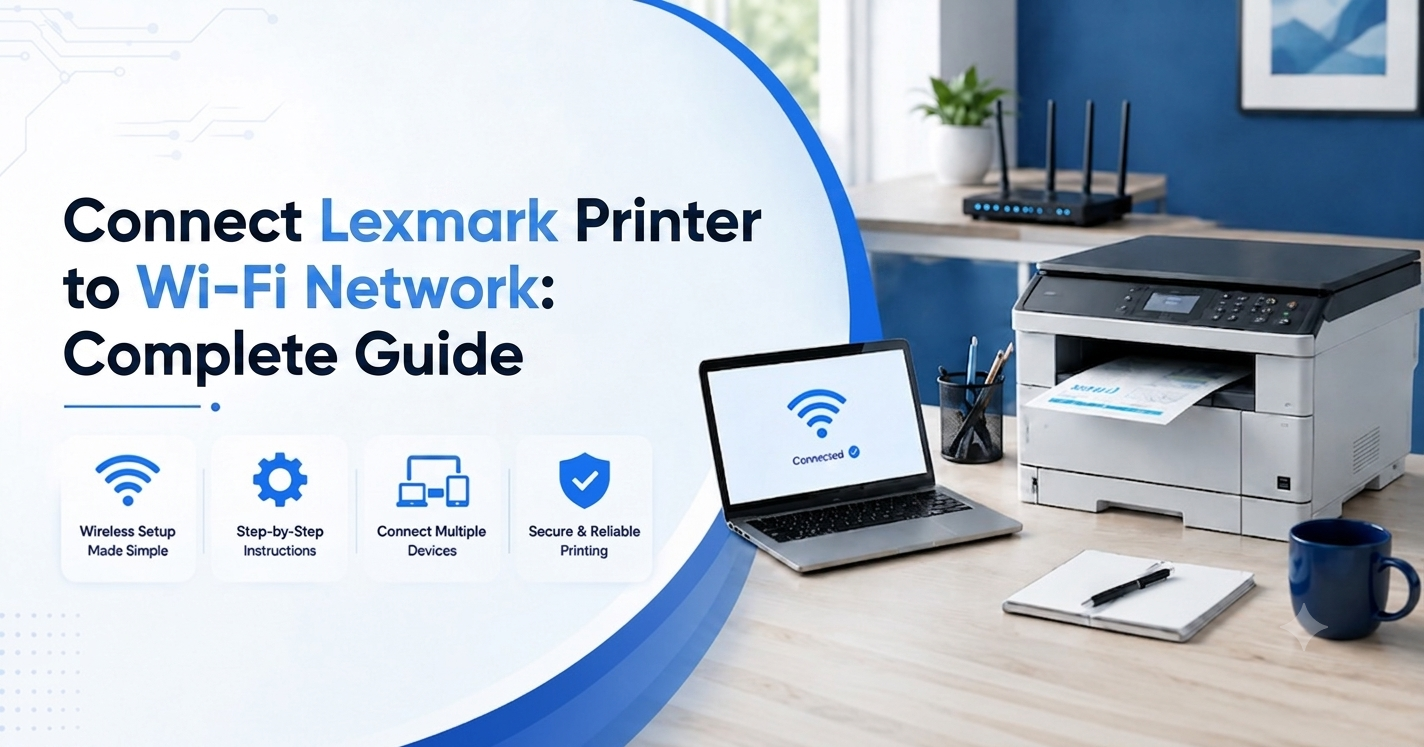
How to Connect Lexmark Printer to Wi-Fi Network: Complete Guide

Wireless printing has changed the way individuals use printers at home and at work. With a Wi-Fi-enabled printer, many users can connect to print documents from PCs, tablets, and cellphones using the same network instead of plugging in every device with a USB cable. Connect Lexmark printer to Wi-Fi network when your Lexmark printer is ready to talk to all your compatible devices, and you have more freedom of placement.
Table of Contents
ToggleGenerally, the installation process is straightforward, but many customers face delays because they omit essential preparation stages or overlook network settings. A planned strategy and understanding how wireless communication works will make the installation considerably smoother. When setting up a new printer or attaching an old printer to a different network, there are several steps to take, and knowing the appropriate approach saves time and prevents debugging later.
A Complete Process for Connect Lexmark Printer to Wi-Fi
Before you start the complete connect Lexmark printer to Wi-Fi process, make sure your wireless network is working properly. Ensure the router is powered on, the Internet connection is operational, and the Wi-Fi signal is available where you will be placing the printer. During the first-time setup, please keep the printer close to the router. This might help improve signal strength and reduce the chances of connection failures.
Before you begin installation, you should also have your wireless network name (SSID) and password ready. These credentials will be required for Lexmark wireless setup. If you’ve recently updated your router or Wi-Fi password, changing these details ahead of time will help prevent repeated connection failures during setup.
Choose the Appropriate Wireless Connection Method
Newer Lexmark printers include a variety of ways to configure a wireless connection. Most models sport an on-screen setup wizard that walks you through choosing a network and entering the password. Others might offer Wireless Protected Setup (WPS), which connects compatible routers and printers securely without needing to type network credentials manually.
The method you choose depends on the printer model and the network configuration. The setup procedure gives you more flexibility over which network you connect to, but if both devices support it, you can use WPS to speed things up. No matter what technique you pick, paying close attention to the directions throughout the Lexmark wireless setup will provide you with a secure, dependable connection for uniform printing.
Connect Lexmark Printer to Wi-Fi Network
Once you’ve chosen your connection method, the printer will start looking for available wireless networks. Choose the relevant network from the list shown and input the password if needed. Wi-Fi passwords are case-sensitive, so even one wrong character can prevent the printer from joining correctly.
Once connected, most printers will show a notification confirming that they have successfully joined the wireless network. On some models, you can also print a network settings report, which shows the IP address given to it, signal strength, and connection status. This information might be helpful if you need to install the printer on other devices later.
Install Printer Drivers and Complete Device Setup
Just because the printer is wireless does not mean all computers can talk to it right away. Each computer requires printer drivers so that the operating system can recognize the device and access its printing features. Installing updated drivers during the Lexmark printer setup helps to ensure greater compatibility with newer operating systems and software applications.
Typically, the installation software will scan your local network and immediately find any available printers. When the Lexmark printer shows up, you are done pairing it. When the installation is complete, a sample document is printed to verify that the printer and computer can communicate successfully and that the installation was successful.
Enhance Wireless Stability to Print Daily
Getting a good wireless connection is just the first step to finishing the installation. Signal quality can be affected by environmental variables such as thick walls, neighboring electronic equipment, and network congestion. Printing in a location where the Wi-Fi connection is stronger can result in less delay in communication and more reliable printing.
Updating the firmware on your router and printer might also aid in consistent functioning. Manufacturers may give updates to improve network interoperability, fix known problems, and boost security. Regular updates help to make your Lexmark wireless setup experience more fluid even when future operating system or network upgrades occur.
Resolving Frequent Issues With Wireless Connections
Even after a successful installation, wireless issues may occasionally arise. If the printer unexpectedly goes offline, it is typically enough to reboot both the printer and the router to re-establish contact. Also, verify whether the printer mistakenly joined another open network or lost its saved network settings after the power interruption.
If you continue to experience troubles, check the printer’s network status page for the reason. Poor signal strength, wrong IP settings, or old drivers generally cause intermittent connectivity. Often these problems can be more efficiently solved by repeating selected elements of the Lexmark printer configuration than by reinstalling everything from the beginning.
Conclusion
Connect Lexmark printer to Wi-Fi network is not the only thing you need to do for a Lexmark printer setup. You also need to do a few more things to complete your Lexmark printer setup successfully. Your network is ready. Choosing the right way to connect, getting new drivers, and keeping a steady wireless setup all help your performance stay reliable. Regular maintenance and strong security measures can increase reliability and help safeguard your printer from unnecessary interruptions. If you are setting up a new printer or connecting an old one after you have changed your network, doing things in the right order will make the process easier. A Lexmark wireless setup done properly means you can print confidently from numerous devices, gives you more freedom to move around your business or home, and makes you less likely to experience connectivity problems in the future.
Tech Support
John Doe
I am a technology content writer and editorial contributor at HelpStacker, specializing in printer troubleshooting, software support, networking, and consumer technology guides. He focuses on creating clear, easy-to-follow articles that help readers diagnose common technical problems and find practical solutions. At HelpStacker, John researches product documentation, industry best practices, and official manufacturer resources to ensure content is accurate, up to date, and useful for everyday users. His writing covers HP, Canon, Epson, Brother, Dell, and other leading technology brands, with an emphasis on printer setup, connectivity issues, driver installation, Wi-Fi configuration, and performance optimization. Every article written or reviewed by John follows HelpStacker's editorial standards, prioritizing accuracy, clarity, and user-first information. His goal is to simplify technical concepts into actionable steps that readers can confidently follow. When he's not writing about technology, John enjoys staying updated on the latest consumer electronics, software innovations, and emerging trends in digital support.